Understanding your river cruise cabin – what space, storage and views you'll actually get
 Save
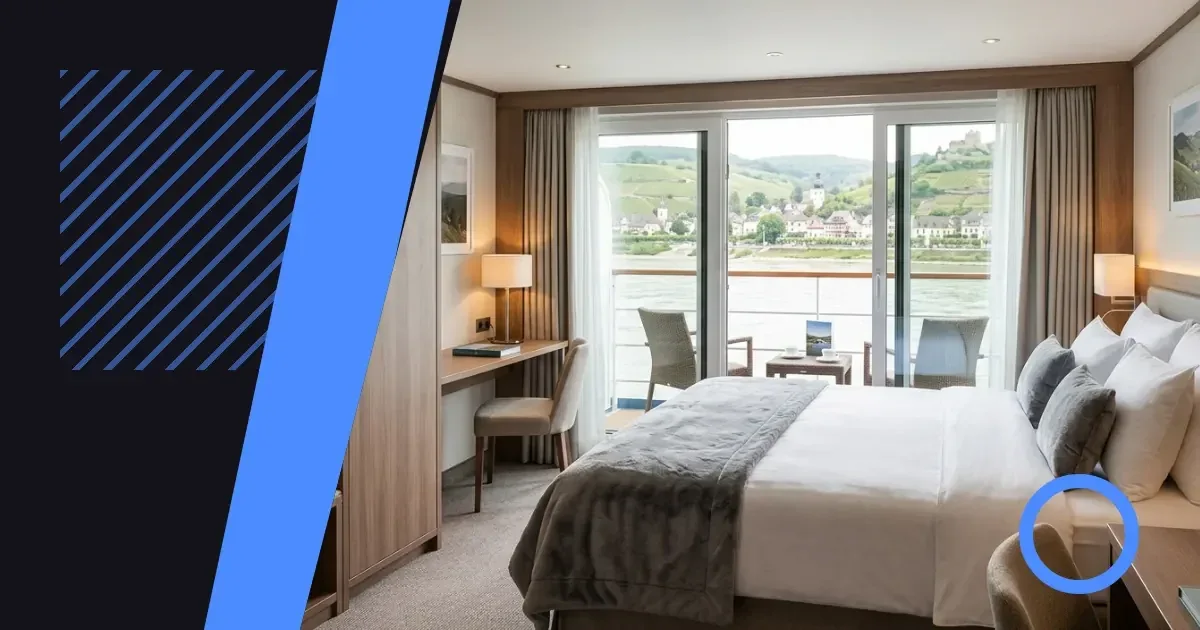
Your river cruise cabin is where you'll sleep, store your luggage and prepare for the day ahead. Most cabins are compact but carefully designed, with a bed, wardrobe, bathroom and either a window or a balcony. Avon Leisure Cruises explains what's typically included, how deck levels shape your experience and which features make the most difference during your trip.
Work out how much space you'll have
River cruise cabins are smaller than hotel rooms. Expect a space large enough for a double bed, a narrow wardrobe and a path to the bathroom, but not much more. Two people can move around comfortably if one sits while the other unpacks.
The bed takes up most of the floor. Some cabins offer twin beds that can be pushed together; others have a fixed double. A small desk or shelf sits against one wall, usually with a mirror above it. There's rarely an armchair or sofa.
You'll spend most of your waking hours on deck, in the lounge or ashore, so the cabin functions as a place to sleep and change rather than a space to relax in. If you need room to spread out, consider spending time in the communal areas instead.
Where your luggage goes
Storage is limited. A wardrobe with hanging space for a few outfits, a small chest of drawers and perhaps a shelf above the bed cover most of what's provided. Suitcases often slide under the bed or sit on a luggage rack near the door.
Bring soft bags rather than hard cases if possible – they fold away more easily once unpacked. What to pack for your river cruise covers how to keep your luggage light and make the most of limited storage.
See what the bathroom includes
River cruise bathrooms are compact. A shower, toilet and basin fit into a space roughly the size of a small home bathroom, with everything within arm's reach. The shower is usually a corner cubicle with a folding door or curtain.
Water pressure varies. Some boats have strong, steady flow; others offer a gentler trickle. Hot water is reliably available, and towels are changed regularly by the housekeeping crew.
Storage in the bathroom is minimal. A narrow shelf above the basin holds toiletries, and a hook on the door takes a dressing gown. Pack travel-sized bottles and keep only what you're using that day on the shelf.
Choose between window types and deck levels
Cabins differ by what view they offer and where they sit on the boat. Lower-deck cabins often have windows at or just above the waterline. Mid-deck cabins have larger windows at eye level when you're standing. Upper-deck cabins may include a French balcony or a small step-out balcony.
A French balcony is a floor-to-ceiling glass door that opens for fresh air but has a railing instead of a platform outside. You can stand at the threshold and look out, but there's no outdoor seating. A step-out balcony gives you a narrow outdoor platform with two chairs, enough space for one person to sit comfortably or two to stand side by side.
Weigh the trade-offs of each level
Lower-deck cabins cost less and feel more stable, but the view is limited and you may hear engine noise. Upper-deck cabins offer better views and quieter nights, but they cost more and you'll feel more motion if the water is choppy. Mid-deck cabins split the difference.
If you value natural light and a clear view of the riverbank, choose mid- or upper-deck. If you're looking to keep costs down and don't plan to spend much time in the cabin, a lower-deck option works well.
Know what's provided and what's not
Most cabins include a hairdryer, soap, shampoo and a small safe. Air conditioning or heating is standard, controlled by a dial or switch near the bed. A television may be mounted on the wall, though reception varies depending on where the boat is moored.
You'll also find a telephone for internal calls to reception or the restaurant, a water carafe or bottles refreshed daily, and a card or booklet listing the day's schedule. Bathrobes and slippers are common but not universal – check your booking confirmation if they matter to you.
What's rarely provided: a kettle, a mini-fridge, an iron or extra blankets beyond what's on the bed. If you need any of these, ask at reception when you board. Crew can often lend an iron or bring an extra duvet.
Prepare for embarkation and daily turndown
When you first enter your cabin, check that everything works. Turn on the taps, test the shower temperature, open and close the wardrobe and try the safe. If something's broken or missing, report it to housekeeping before the boat departs.
Your cabin is cleaned daily while you're at breakfast or ashore. Towels are replaced, the bed is made and any rubbish is removed. If you prefer housekeeping to skip a day, hang a sign on the door or mention it at reception.
In the evening, crew perform a turndown service: curtains drawn, bed covers folded back and the next day's programme left on the pillow. It's a small ritual that marks the end of each day.
Manage noise and sleep quality
River cruise boats are quieter than ocean ships, but you'll still hear sounds from neighbouring cabins, footsteps in the corridor and the engine when the boat is under way. Vibration is more noticeable on lower decks, particularly near the stern.
If you're a light sleeper, bring earplugs. Request a cabin towards the middle of the boat, away from the engine room and public areas. Avoid cabins directly below the sun deck if you're sensitive to footsteps overhead in the early morning.
Moorings can be noisy. When the boat ties up in a city centre, you may hear traffic, music or late-night conversations from the quayside. If silence matters, check your itinerary for overnight stops in quieter villages or rural settings.
Make your cabin feel like your space
- Unpack fully on the first day. Hanging clothes and stowing luggage under the bed creates a sense of order and frees up floor space.
- Use the desk or shelf for daily essentials. Keep your phone charger, glasses and the day's programme within easy reach so you're not hunting through bags each morning.
- Open the window or balcony door when you're in the cabin. Fresh air makes the small space feel less enclosed and lets you hear the sounds of the river.
- Respect quiet hours in corridors and adjoining cabins. Sound travels easily through walls, so keep voices low and avoid slamming doors late at night or early in the morning.
Compare cabin features at a glance
| Feature | Lower deck | Mid deck | Upper deck |
|---|---|---|---|
| Window position | At waterline | Eye level | Above eye level or balcony |
| Motion felt | Less | Moderate | More |
| Engine noise | More noticeable | Quieter | Quietest |
| Natural light | Limited | Good | Best |
Decide what matters most before you book
Your cabin choice should reflect how you plan to spend your time. If you're an early riser who'll be on deck at sunrise and ashore most afternoons, a basic lower-deck cabin saves money without sacrificing comfort. If you enjoy reading by the window or watching the riverbank from your room, invest in a balcony or a larger window.
Consider mobility as well. Upper-deck cabins mean more stairs if the lift is out of service or crowded. Lower-deck cabins put you closer to the dining room and main lounge, which can be easier if you're travelling with limited mobility. Board your river cruise safely covers what to expect when moving around the boat.
Solo travellers often face a single supplement – an extra charge for occupying a cabin alone. Some boats offer dedicated single cabins at a lower rate, though they're fewer in number and book up quickly. If you're flexible on dates, ask whether any sailings waive or reduce the supplement.
Adjust your expectations for the space you get
A river cruise cabin won't match a hotel room for floor space or storage. What it offers instead is proximity to the journey itself: a window onto the river, a bed that travels with you and a private retreat between excursions.
Accept the compact layout as part of the experience. The design encourages you to spend time on deck, in the lounge or exploring ashore rather than staying indoors. Taking children on a river cruise explores how families manage limited cabin space when travelling with younger passengers.
If you find the cabin too small once you've boarded, speak to reception. Upgrades are occasionally available if higher-category cabins are unoccupied, though this isn't guaranteed and may come with an additional charge.
Remember what your cabin does well
River cruise cabins prioritise function over luxury. They keep your belongings secure, give you a comfortable bed and provide a private bathroom with hot water. The window or balcony connects you to the landscape outside, and the daily housekeeping service keeps the space fresh.
Focus on what the cabin enables rather than what it lacks. A small wardrobe encourages you to pack light. A narrow desk becomes a place to write postcards or plan the next day's excursion. A compact shower means you're never far from a hot rinse after a long walk ashore.
Your cabin is one part of a larger journey. The river, the towns you visit and the people you meet on board matter more than the size of the space you sleep in. Approach it as a base rather than a destination, and you'll find it serves its purpose well.
#Cabin types #French balcony #Onboard facilities
Download PDF: Your river cruise cabin checklist PDF, 29 KB
Further reading
Frequently asked questions
How big is a typical river cruise cabin?
Most river cruise cabins are compact, with enough room for a double bed, a small wardrobe, a desk or shelf and a path to the bathroom. Two people can move around comfortably if one sits while the other unpacks, but there's rarely space for an armchair or sofa.
What is the difference between a French balcony and a step-out balcony on a river cruise?
A French balcony is a floor-to-ceiling glass door that opens for fresh air, with a railing but no platform outside. A step-out balcony has a narrow outdoor platform with two chairs, giving you space to sit or stand outside your cabin.
Do river cruise cabins have storage for luggage?
Storage is limited to a wardrobe with hanging space, a small chest of drawers and sometimes a shelf. Suitcases usually slide under the bed or rest on a luggage rack near the door. Soft bags are easier to stow than hard cases.