What a French balcony is and how to decide if it suits your cruise
 Save
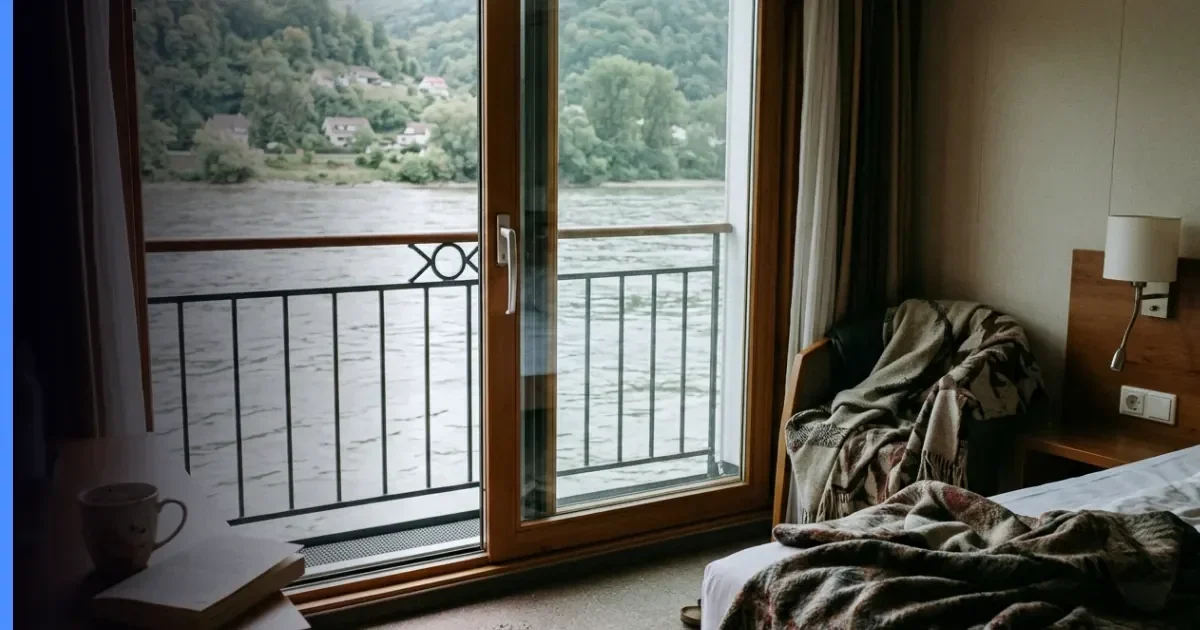
A French balcony is a cabin feature on river cruise ships: floor-to-ceiling glass doors or windows that open fully, giving you direct river air and uninterrupted views from inside your cabin. You stand at the threshold, not outside on a platform. If you've booked a river cruise and seen the term on your cabin description, you'll know within the next few minutes whether it matches what you picture when you hear the word balcony. Avon Leisure Cruises brings you practical guidance on river travel, helping you prepare with confidence.
Recognising the design when you step into the cabin
The doors reach from floor to ceiling and open inward or slide aside completely. When they're open, nothing stands between you and the river—no glass, no railing jutting out from the hull. You're inside the cabin, standing at the edge of the doorway. The shallow ledge outside holds no weight and offers no step-out space.
On some ships the opening spans most of the cabin width; on others it's narrower, framed by fixed panels. Either way, the air moves through freely and the view stretches unbroken from your chair or the edge of your bed.
Comparing it to a walk-out balcony
A walk-out balcony gives you an outdoor platform beyond the cabin threshold, with a railing and room for a chair or two. You step outside and close the door behind you. A French balcony keeps you inside: you open the doors wide, but your feet stay on the cabin floor.
The difference matters if you want to sit outside in the evening air with a drink, or if you travel with someone who prefers to be outdoors while you stay in. A walk-out balcony offers that separation; a French balcony does not.
What you gain with each type
With a French balcony, your cabin stays quieter when the doors are closed—no furniture to shift in the wind, no rain pooling on a deck. The glass is often larger, so the view from your bed or armchair feels more immediate. Walk-out balconies give you private outdoor space and the chance to sit beyond the cabin's interior, which some passengers value highly on longer voyages.
Deciding whether a French balcony meets your needs
Ask yourself how you use a balcony. If you picture morning coffee outside, a book in the shade, or watching villages pass from a deck chair with your feet up, you'll want the walk-out kind. If you're content to open the doors, lean against the frame with your coffee, and retreat inside when the sun's too strong or the breeze too cool, a French balcony delivers that without the step outside.
Passengers who value cabin space often prefer French balconies: the room isn't reduced by an external platform, so the interior feels more generous. Those travelling in cooler months or on rivers with unpredictable weather sometimes find the walk-out balcony goes unused, making the French design a practical middle ground.
Considering mobility and safety
A French balcony removes the step over a threshold and the need to navigate outdoor furniture, which can ease movement for passengers with limited mobility. The doors open wide enough for a wheelchair or walker to reach the threshold. There's no platform to stumble onto in dim light, and no railing to grip when the ship moves through a lock.
Choosing your cabin when both options appear on the deck plan
River ships often offer both types across different decks or cabin categories. Prices vary, though not always as you'd expect: a French balcony on a higher deck may cost the same as a walk-out balcony one level down. Compare the deck location, the cabin size and the balcony type together, rather than choosing by balcony alone.
- Check the deck level. Higher decks give wider views over riverbanks and bridges; lower decks sit closer to the waterline and bring you nearer to the detail of passing villages.
- Read the cabin dimensions. A smaller cabin with a walk-out balcony may feel more cramped than a larger cabin with French doors, even if the outdoor space appeals to you on paper.
- Look at the position along the corridor. Cabins toward the bow or stern sometimes have angled walls or asymmetric layouts, which can affect how the balcony doors open and where the furniture sits.
- Ask the operator what you'll see. Some cabins face the riverbank; others face open water or, on certain routes, industrial stretches. Knowing the typical view helps you weigh whether stepping outside adds enough to justify the cost difference.
Understanding what the fare includes beyond the cabin itself
Your cabin type affects your budget, but the all-inclusive elements of your river cruise fare determine how much you'll spend once you're aboard. Whether you choose a French balcony or a walk-out, the meals, shore excursions and often the drinks remain the same across cabin categories on most ships.
Managing expectations when you board
If you've never travelled on a river ship, the term "balcony" may conjure a broader platform than any river cabin provides. Even walk-out balconies are compact: two chairs and a small table fit snugly. French balconies offer no platform at all. Neither is a failing—they're designed for rivers that are narrower and shallower than the open sea, and for ships that glide close to bridges and locks where protruding structures would snag.
The reward is intimacy with the route. Villages appear close enough to hear voices from the bank; you drift past vineyards and châteaux at eye level. A French balcony frames that experience without asking you to step outside to claim it.
When the weather shapes your experience more than the balcony type
Rain, wind and cold all arrive on rivers. A French balcony lets you close the doors in seconds, keeping the cabin warm and dry. A walk-out balcony requires you to secure any furniture and towels before the rain reaches you, and wetness lingers on the deck afterward. In practice, many passengers with walk-out balconies spend more time at the threshold than outside, particularly on northern European routes in spring and autumn.
| Feature | French balcony | Walk-out balcony |
|---|---|---|
| Outdoor seating | None—you remain inside the cabin | Chairs and table on a private platform |
| Door operation | Hinged or sliding, opens fully inward | Standard door leading to an external deck |
| Cabin floor space | Often larger, as no external structure reduces the interior | May be smaller to accommodate the balcony |
| Weather protection | Close doors immediately; no outdoor elements to manage | Furniture and deck exposed; requires securing in poor weather |
Knowing what to ask the operator before you book
Brochures and websites sometimes label cabins inconsistently. One line may call the same design a "panoramic window," another a "French balcony," and a third a "juliet balcony." Ask whether the doors open, how wide the opening is, and whether any part of the structure extends beyond the cabin wall. Request photos of the specific cabin category you're considering, taken from inside looking out.
If the operator cannot confirm the details, look for deck plans that show cabin layouts. The symbols usually distinguish between fixed windows, French balconies and walk-out platforms, though the legend may not be immediately obvious. Check the key carefully.
#Cabin types #Onboard facilities
Download PDF: Your French balcony cabin checklist PDF, 29 KB
Further reading
Frequently asked questions
Can you sit outside on a French balcony if the weather's fine?
No. A French balcony has no platform or railing outside the cabin—you stand at the open doorway inside. For outdoor seating, you'll need a walk-out balcony or use the ship's upper deck.
Does a French balcony cost less than a walk-out balcony on the same ship?
Sometimes, but not always. Price depends on deck level, cabin size and position as much as balcony type. Compare the full cabin details rather than assuming the French balcony is the cheaper option.
What happens if it rains while the French balcony doors are open?
You close the doors. Most rain comes at an angle, so a brief shower may not reach inside, but you can shut the opening in seconds to keep the cabin dry. No outdoor furniture or deck to clear.