Board Your River Cruise Safely – What to Expect from Gangways and Crew Support
 Save
The gangway connects your river cruise boat to the shore, and you'll use it several times throughout your trip. Most passengers step on and off without trouble, but the angle changes with water levels and the width varies between ports. This guide walks you through what you'll encounter, how to prepare if you have mobility concerns, and where crew assistance appears. Avon Leisure Cruises gathers practical information for passengers planning UK and European river trips.
Recognise What a Gangway Is and Where You'll Meet It
A gangway is the ramp or walkway crew place between the boat and the riverbank or pontoon. You cross it when you leave for a shore excursion and again when you return. River cruise boats moor at different types of landing points, so the gangway setup shifts from port to port.
Some stops use fixed pontoons with a short, level walkway. Others require crew to extend a longer ramp directly to a sloped embankment. The surface is usually metal with raised treads for grip, and handrails run along both sides. Width varies, but most gangways accommodate one person at a time.
Spot the Difference Between a Pontoon and a Riverbank Mooring
When the boat ties up at a pontoon, the gangway tends to be shorter and steadier because the pontoon floats and adjusts with the water. When crew moor directly to a riverbank or quay, the gangway may be steeper, especially if the water sits low. On some itineraries, you'll meet both types in a single week.
Prepare for the Angle to Change Throughout Your Trip
River levels rise and fall with rainfall, season, and the operation of locks upstream. A gangway that felt flat in the morning can slope noticeably by the afternoon if the boat moved to a different mooring or the river dropped. Crew adjust the ramp to keep it safe, but the incline remains outside their control when water levels shift.
Steeper gangways require you to lift your feet higher with each step and use the handrails for balance. If you have stiff knees or limited mobility, a steep angle makes boarding and disembarking more tiring. Some passengers choose to skip certain excursions when they know the mooring will be awkward.
Ask Crew About Conditions Before You Disembark
Crew announce mooring details at breakfast or over the ship's address system. Listen for mentions of steep gangways, uneven cobbles on the quay, or long walks between the boat and the town centre. When the announcement doesn't give enough detail, ask a crew member directly before you leave the boat. They know which stops present the most difficulty.
Use Handrails on Both Sides Every Time You Cross
Every gangway on a river cruise has handrails fixed to both edges. Hold one rail when you step onto the ramp and keep your grip until you reach solid ground. Even when the gangway looks level, slight movement of the boat or a wet surface can catch you off guard.
Carry bags in one hand or wear a rucksack so your hands stay free. If you're holding a camera, phone or jacket, tuck it away before you cross. Crew rarely stop passengers who don't use the rails, but you protect yourself more when you do.
Tell the Cruise Line About Mobility Concerns Before You Travel
Most river cruise operators ask about mobility needs during the booking process. If you use a walking stick, wheelchair, or have balance issues, state this clearly when you reserve your place. The operator cannot flatten the gangway, but they can assign you a cabin close to the exit, arrange for crew assistance at each port, and warn you in advance when a stop presents unusual difficulty.
Some boats carry portable ramps or wider gangways for passengers with limited mobility, though not all vessels have this equipment. Asking early gives the operator time to confirm what support they can offer on your specific itinerary.
Confirm What Assistance Crew Offer at Each Port
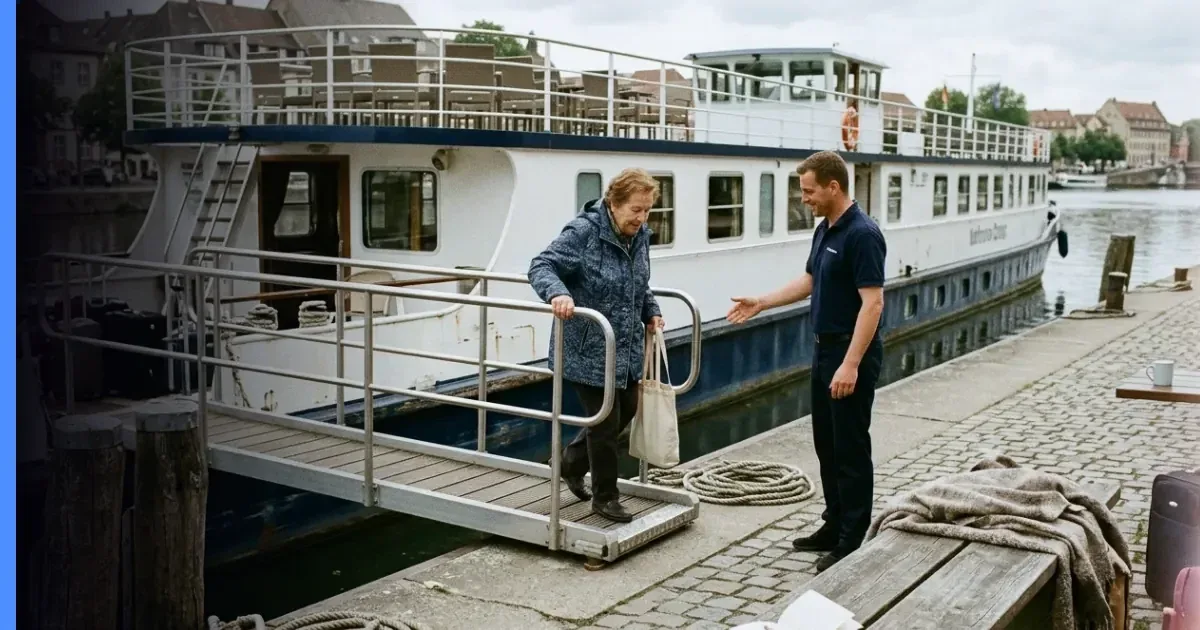
Crew typically station themselves at the top and bottom of the gangway during embarkation and disembarkation. They watch passengers cross and offer a steadying hand if you pause or look uncertain. If you need more help, such as an arm to hold or someone to carry a bag, ask the crew member at the gangway before you step onto it.
On some boats, crew walk alongside passengers who request it, particularly when the ramp is steep or wet. This isn't automatic; you must ask for it. No crew member will judge you for needing support, and the request is common enough that they respond without fuss.
Follow These Steps When You Board or Leave the Boat
- Check the gangway angle and surface from the deck or quay before you step onto it.
- Secure bags across your body or in a rucksack so both hands are free.
- Grip the handrail on one or both sides and keep your hold until you reach the other end.
- Step carefully where the gangway meets the deck or shore, as this is where most trips happen.
- Move at your own pace; crew expect passengers to take their time, and there's no queue behind you.
Expect Variations Between Shore Excursions and Evening Returns
Morning departures for excursions tend to be busier, with passengers leaving in a short window. Crew manage the flow, but you may wait a moment at the top of the gangway while others cross ahead of you. Returning to the boat later in the day is usually calmer, with passengers trickling back over several hours.
Some excursions involve multiple stops, and each one brings a different gangway setup. If the itinerary includes a visit to a vineyard or museum with its own dock, expect crew to set up a temporary ramp there as well. The same rules about handrails and footing apply at every crossing.
Compare Your Options If Gangways Worry You
| Approach | What It Involves | When It Suits You |
|---|---|---|
| Ask for crew assistance | A crew member walks beside you and offers a hand or arm | You have mild balance concerns or feel unsteady on slopes |
| Choose a lower-deck cabin | Reduces the number of stairs you climb between your cabin and the gangway | You want to minimise walking and stair use throughout the trip |
| Skip difficult excursions | Stay on board when the mooring is steep or the walk to town is long | You prefer to avoid certain physical challenges and explore independently later |
| Book a barge or canal cruise | Smaller vessels often moor at gentler, more accessible spots | Mobility is a primary concern and you want to reduce gangway stress |
Weigh the Trade-Offs of Staying on Board
Choosing to remain on the boat during a particularly steep mooring is a reasonable decision. You miss that excursion, but you avoid a crossing that might leave you sore or anxious. Most boats keep a small galley open and crew on duty, so you won't be alone. Some passengers use these quieter periods to rest, read on deck, or catch up on photos.
Watch for Wet or Icy Surfaces in Poor Weather
Rain makes gangway treads slippery, even with anti-slip surfaces. Crew sometimes lay rubber mats or towels over the ramp when it's wet, but you still need to step carefully. In colder months, frost or ice can form on metal surfaces overnight. Crew clear this before passengers disembark, but patches may remain in shaded areas.
Wear shoes with good grip rather than smooth-soled sandals or dress shoes. If the weather forecast shows rain or cold, pack footwear that handles wet and uneven ground. Your choice of shoes affects your confidence on the gangway as much as the angle of the ramp itself.
Know That Most Passengers Manage Without Incident
River cruise gangways present challenges for some passengers, but the majority cross without difficulty throughout their trip. Crew set up ramps at every port, and they adjust the angle to the safest position available given water levels and mooring conditions. Handrails, crew supervision, and the relatively low speed of movement all reduce risk.
If you have serious mobility limitations, choosing your first river cruise carefully matters. Itineraries that include more pontoon moorings or fewer steep embankments suit passengers who worry about gangway access. Operators sometimes publish accessibility notes for specific routes, and travel agents familiar with river cruising can steer you toward gentler options.
Plan Ahead If You Travel with Children or Elderly Relatives
Young children and older relatives often need extra supervision on gangways. Small children may try to run across or lean over the handrails, while elderly passengers may hesitate or lose balance mid-crossing. Assign one adult to accompany each person who needs support, and cross one at a time rather than as a group.
Some families find that taking children on a river cruise works better when the youngest child is old enough to follow instructions about handrails and walking pace. Others pack a child carrier or sling for toddlers, which keeps hands free and the child secure during crossings.
Check What Happens If You Cannot Use the Gangway at All
A very small number of passengers discover mid-cruise that they cannot manage the gangway safely, even with crew assistance. This is rare, but it does happen. In such cases, operators usually arrange alternative access where possible, such as a wheelchair lift or a different mooring point.
If no alternative exists, the passenger remains on board for that port. Operators do not refund missed excursions caused by gangway access issues, as water levels and mooring conditions sit outside their control. Travel insurance with medical and mobility cover can offset some of these costs if the situation arises.
Remember That Crew Want You to Feel Secure
Crew see passengers of all abilities cross the gangway every day, and they adjust their support to match what each person needs. If you feel nervous, tell them. If you need to stop halfway, they'll wait. If you want someone to carry your bag or hold your elbow, they'll do it. River cruise staff expect these requests and treat them as routine.
The gangway is a practical piece of equipment, not a test. You don't need to prove you can manage it alone, and there's no shame in asking for the help that makes the crossing safe and comfortable. Most passengers who worried before their trip report that the gangways were less daunting than expected once they crossed the first time with crew nearby.
Download PDF: Safe Gangway Crossing Checklist PDF, 28 KB
Further reading
Frequently asked questions
How steep is the gangway on a river cruise?
The angle depends on the water level and the type of mooring. Some gangways are nearly flat when the boat ties up at a pontoon, while others slope noticeably when crew moor directly to a riverbank. The incline changes throughout your trip as water levels rise or fall.
Can crew help me cross the gangway if I have mobility issues?
Yes. Crew station themselves at the gangway during boarding and disembarkation, and they offer assistance if you ask. Tell them before you step onto the ramp if you need someone to hold your arm, carry a bag, or walk beside you.
What should I wear on my feet when using the gangway?
Wear shoes with good grip rather than smooth soles. Rain, frost, or wet surfaces make gangway treads slippery, even with anti-slip patterns. Sturdy walking shoes or trainers handle uneven ground better than sandals or dress shoes.